Rethinking “King and Country” in a Modern Australia
In the public imagination, Australia’s 1999 republic referendum is often remembered as a decisive triumph for the monarchists. The reality is far more modest. The proposal for a republic was defeated 55% to 45%, hardly an overwhelming landslide, and certainly not a sign that Australians were passionately committed to the monarchy. In truth, the “No” campaign succeeded largely because republicans could not agree on how a president or head of state should be selected—a division that ultimately helped sink the proposal.
That unresolved question still hangs over any future debate: if Australia were to become a republic, who would speak for the nation in a ceremonial and constitutional role, and how would we choose them? Public consultation on this remains essential. But while the constitutional detail can be discussed calmly and constructively, other aspects of the monarchy sit less comfortably with many Australians today.
One example is a tradition that still appears at some community gatherings: the loyal toast to “King and Country.” It is particularly notable that some Lions Clubs continue this practice, often out of long-standing habit rather than deliberate choice. It is familiar, ceremonial, and for many members it may seem harmless. But in a modern, diverse Australia, it is worth pausing to ask whether this tradition still aligns with our national values—and with the values Lions Clubs themselves publicly uphold.
For many First Nations Australians, the phrase “King and Country” is not a benign formality. It carries the weight of history: invasion, dispossession, and violence committed under the authority of the Crown. Over 450 massacres have been documented across the continent, and First Nations numbers fell from over a million before colonisation to fewer than 100,000 by 1900. These are not distant statistics; they are part of the living memory of communities who continue to fight for recognition, justice, and healing.
Even the very word Country has changed meaning. In the traditional toast, “Country” referred to the British Empire—loyalty to a distant monarch and imperial project. For Indigenous Australians, however, Country means something far deeper: land, life, kinship, spirit, and identity. Country is lived, not ruled. To continue using an imperial phrase without reflection risks obscuring that profound connection and inadvertently disrespecting those whose custodianship of this land spans tens of thousands of years.
Lions Australia is an organisation that prides itself on unity, community service, and neutrality in matters of politics. The Lions Code of Ethics speaks of building harmony and acting with fairness and respect. Against that backdrop, the loyal toast sits awkwardly. It injects an explicitly political and colonial sentiment into a space intended for community good and inclusiveness. One does not have to be anti-monarchy to recognise that the gesture is out of step with Australia’s contemporary identity.
No one is suggesting that individuals cannot privately honour whichever traditions are meaningful to them. But in public, collective settings—especially those committed to service and inclusion—it is reasonable to ask whether a toast to “King and Country” still serves us, or whether it inadvertently excludes people who do not share that history or allegiance.
Australia is moving toward a more mature understanding of itself. We are no longer a colony, and increasingly we speak of our future in terms of shared belonging rather than inherited hierarchy. If we raise a toast at all, perhaps it should be to Australia itself—to the people who live here, to the Country we all depend on, and to the future we build together.
Tradition matters, but so does evolution. And a simple gesture, reconsidered with care, can be a meaningful step toward a more genuinely inclusive national community.
As Australia reflects on its constitutional future and the evolving meaning of our shared identity, it is worth asking ourselves: what traditions should we keep, adapt, or retire if we want this country to feel like home for everyone? If we were to move toward a republic, what kind of head of state—and what national symbols—would genuinely reflect who we are today?
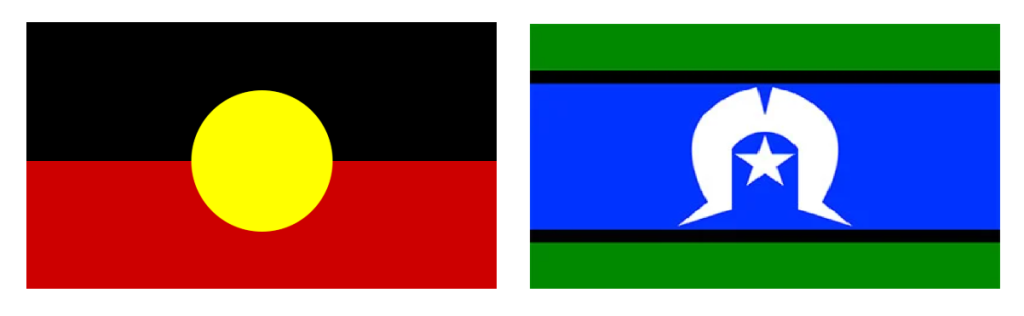
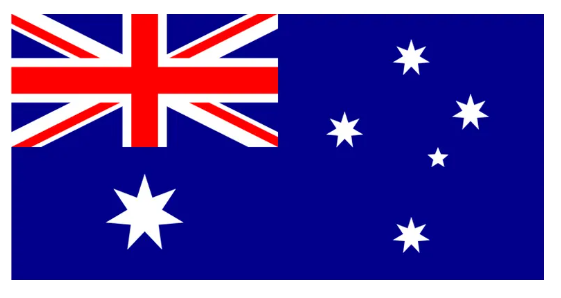
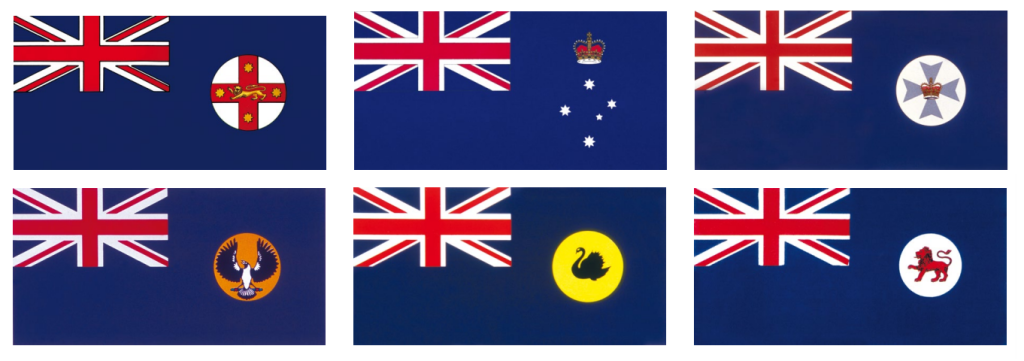
Australia’s national flag and all the states’ flags have the Union Jack in the top left None of the flags for the territories include a Union Jack and nor do the flags of Australia’s indigenous people and the Torres Strait Islanders. This is surely highly divisive. Should we not have a flag that brings all Australians together, not flags that demarcate two distinct groups. And where are all the peoples from all over the world.
And more broadly, for all our community organisations and civic groups, how can we ensure that the customs we carry forward honour both our history and the full diversity of the range of Australians today?
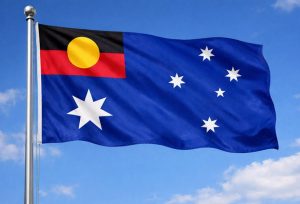
Here are the standard flags but please let us know what you think of the possible alternative combining the First Nations image with Australia’s Southern Cross, shown after the other flags. Is it not time we removed the Union Jack from our flags?
_______________________________________________________________________________________________________________________